




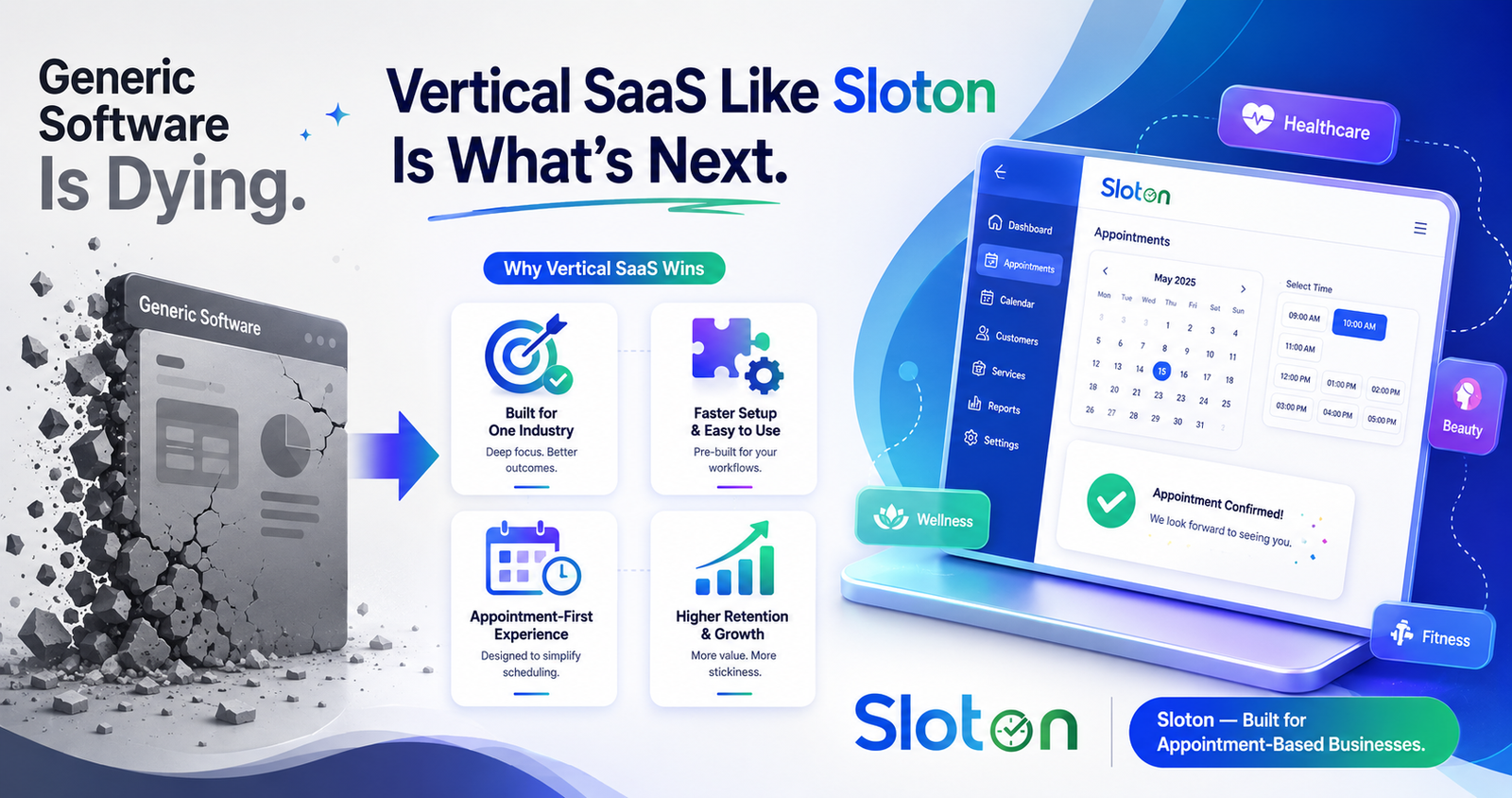
For years, businesses accepted a strange trade-off: buy software built for “everyone” and spend months bending it to fit your actual workflow. That era is closing fast. A new category — Vertical SaaS — is flipping the script by building software for one industry, one workflow, one set of problems, instead of trying to please everybody at once.
If you’ve never heard the term before, you’re about to see it everywhere. And if you run a service-based business, understanding this shift could change how you choose software for good.
What is Vertical SaaS, Really?
Vertical SaaS refers to software built specifically for a single industry — think scheduling software built only for salons, billing software built only for law firms, or inventory tools built only for restaurants. It’s the opposite of horizontal SaaS, which tries to serve every kind of business with the same generic feature set.
The difference sounds small. In practice, it’s massive. A horizontal tool gives you a blank canvas and expects you to configure it into something useful. A vertical SaaS platform already understands your industry’s language, workflows and pain points before you’ve typed a single setting.
This isn’t a fringe idea anymore. Industry research now puts the global vertical software market at roughly $164 billion in 2026, on pace to reach $283 billion by 2031 — a growth curve that’s outpacing generic, horizontal software by a wide margin, according to SaaS Goodies’ vertical SaaS market data.
Why Vertical SaaS Vs Horizontal SaaS is the Debate Every Business Should Have
Most business owners don’t realize how much time they lose to generic software until they compare it side by side with an industry-specific alternative.
Horizontal tools force you to:
- Rebuild workflows that industry-specific platforms already have built in
- Pay for a dozen features you’ll never touch
- Train staff on interfaces that don’t match how your business actually runs
- Rely on third-party plugins just to get basic industry functionality
Industry-specific software, on the other hand, is designed around how your business already operates. Instead of molding your business around the software, the software molds itself around your business.
This is exactly why industry-specific appointment scheduling tools are gaining ground so quickly — they remove the guesswork that generic booking systems leave behind.
The Rise of Niche SaaS Platforms
Niche SaaS platforms didn’t appear overnight. They’re the result of founders getting frustrated with generic tools and deciding to build something better for their specific corner of the market. Over the last few years, this pattern has repeated across dozens of industries — healthcare, real estate, fitness, salons, legal services, and more.
If you want a fuller picture of just how wide this shift has spread, check out our breakdown of the Top 20 Niches in Vertical SaaS.
What’s driving the momentum? A few things:
- Cloud infrastructure got cheaper, making it viable to build for smaller, focused markets instead of chasing mass adoption.
- Businesses got tired of “almost right” software that required constant workarounds.
- Founders with real industry experience started building tools they wished existed when they worked in that field.
The result is a wave of vertical SaaS companies that out-innovate the generic giants simply by focusing deeper instead of spreading wider. Recent benchmark data covering more than 200 vertical SaaS companies across 20 sectors found their median annual revenue growth outpacing horizontal-focused competitors, according to reporting from SaaS Mag.
Vertical SaaS Trends 2026: What’s Changing Right Now
Looking at where things stand this year, a few trends stand out:
- AI-powered automation built for specific workflows — not generic AI bolted onto old software, but automation trained around how a particular industry actually operates.
- Consolidation of point solutions — instead of juggling five different tools, businesses want one platform that handles scheduling, payments, reminders and client management together.
- Mobile-first design — service businesses run from phones, not desktops and vertical SaaS platforms are being built accordingly.
- Faster onboarding — because the software already understands the industry, setup time is shrinking from weeks to days.
These trends aren’t theoretical. They’re shaping which tools business owners are actually choosing to adopt this year.
Where Sloton Fits Into the Vertical SaaS Story
Sloton was built around a simple observation: appointment-based businesses don’t need another all-purpose tool — they need software that understands appointments as a core business function, not an afterthought.
That’s the difference between Sloton and a generic calendar-plus-booking-plugin setup. Every part of the platform, from reminders to client history to staff scheduling, is designed around one goal: helping appointment-based businesses run smoother, without the extra configuration overhead that horizontal tools demand.
This is what makes Sloton a genuine Sloton vertical SaaS play rather than just another booking widget. It’s not trying to be everything for everyone — it’s trying to be the best possible tool for businesses that live and die by their appointment book.
Further Reading
If you’re curious how this plays out for a specific audience, take a look at our piece on Salon Booking Software New York Owners Wish They’d Found Years Ago — it’s a good example of vertical SaaS thinking applied to one specific industry.
Best Vertical SaaS Tools: What Should You Look For?
Not every tool that calls itself “industry-specific” actually delivers on that promise. Here’s what separates the real thing from a repackaged generic tool:
- Built-in workflows for your industry — not generic templates you have to customize from scratch
- Support that understands your business — not a help desk reading from a script
- Pricing that fits your business size — not enterprise pricing forced onto a small team
- Fast, guided setup — you should be running within a day, not a month
When evaluating vertical SaaS software, run it against this checklist before committing. If a platform can’t check most of these boxes, it’s probably horizontal software wearing a vertical label.
Custom-Built Software Vs Generic Software: The Real Cost Difference
It’s easy to assume generic software is “cheaper” because the sticker price looks lower. But the real cost shows up later — in hours spent configuring, in staff confusion, in missed appointments because reminders don’t work the way your business needs them to.
Custom-built, industry-specific software often costs less over time because it eliminates the hidden expenses of adapting a one-size-fits-all product. You’re not paying for features you don’t use and you’re not losing revenue to friction the software creates.
Vertical SaaS for Service Businesses: Why It Matters Most Here
Service businesses — salons, clinics, consultants, fitness studios, repair shops — run on appointments. When your entire revenue model depends on people showing up at the right time, generic software isn’t just inconvenient. It’s a liability.
This is exactly the gap vertical SaaS platforms like Sloton were built to close. Appointment booking software for small business shouldn’t be an afterthought bolted onto a generic calendar app — it should be the backbone of how the business runs day to day.
The Bottom Line
Generic software had its moment, but the businesses winning today are the ones choosing tools built specifically for how they work. Vertical SaaS isn’t a passing trend — it’s a fundamental shift in how software gets built and the companies embracing it early are the ones setting the pace for their industries.
Sloton is one of those companies. Built specifically for appointment-based businesses, it’s proof that focused software beats generic software every time.