

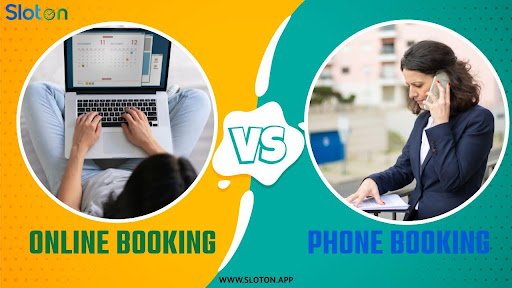
The way customers book services has undergone a major transformation in recent years. While phone booking was once the primary method, today’s customers are increasingly turning to online booking systems, appointment apps and scheduling software online for faster and more convenient experiences.
But when it comes to actual results, which method drives more conversions-online booking vs phone booking? The answer lies in customer behavior, accessibility and data-backed insights.
The Shift from Phone Calls to Digital Convenience
A free online booking system allows customers to book appointments instantly through a website or booking appointment app, without waiting or relying on business hours. On the other hand, phone booking requires direct interaction, staff availability and time investment from both sides.
This shift is largely driven by changing expectations. Modern consumers value speed, flexibility and control over their decisions. Waiting on hold or calling during limited hours often creates friction, which directly impacts conversion rates.
Conversion Performance: A Clear Difference
When comparing conversion outcomes, online booking software consistently outperforms phone booking.
Industry data shows that phone booking typically converts only a small percentage of inquiries, while digital booking platforms can achieve significantly higher conversion rates due to ease of use and accessibility. The ability to book instantly-especially outside working hours-plays a major role in this difference.
Whitepaper Insight (Authoritative Research)
Research published in ScienceDirect study on online booking conversion behavior found that digital booking environments significantly improve conversion rates when visibility, recommendations and user-friendly interfaces are optimized. The study highlights that elements like search ranking, customer recommendations and ease of navigation directly increase the likelihood of turning visitors into confirmed bookings.
A Practical Comparison: Online Booking vs Phone Booking
The difference between these two methods becomes clearer when you look at how they function in real-world scenarios.
- Availability is one of the biggest factors. An online booking system works 24/7, allowing customers to book anytime, including late nights and weekends. Phone booking, however, is restricted to business hours. This limitation alone causes businesses to miss a significant number of potential customers.
- Speed and convenience also play a critical role. With scheduling software online, a customer can confirm an appointment in just a few clicks within minutes. In contrast, phone booking involves dialing, waiting, explaining requirements and confirming details, which takes considerably longer and increases the chances of drop-offs.
- Customer preference has shifted strongly toward digital. Most users today prefer using an appointment app because it gives them control over time slots, eliminates waiting and offers transparency. Phone calls, especially for simple bookings, are increasingly seen as inconvenient.
- Accuracy and efficiency are another point of difference. Online booking software eliminates human error by automating scheduling, confirmations, and reminders. Phone bookings, however, rely on manual input, which can lead to double bookings, missed details, or miscommunication.
- Scalability is where online systems clearly win. A booking appointment app can handle unlimited bookings simultaneously, while phone booking depends entirely on staff availability, making it harder to scale during peak demand.
Why Online Booking Drives Higher Conversions
The biggest reason online booking systems generate more conversions is reduced friction. Every extra step in the booking process increases the chance of losing a customer. By simplifying the journey, digital tools make it easier for users to complete their bookings instantly.
Another important factor is accessibility. A large portion of customers prefer booking outside traditional working hours. Without a free online booking system, these opportunities are simply lost. Using SAAS is very useful for businesses for driving growth and endless conversions.
Additionally, automated reminders sent through appointment apps improve attendance rates, ensuring that bookings actually turn into completed services. This not only boosts conversions but also improves overall business efficiency.
Where Phone Booking Still Holds Value
Despite the advantages of digital platforms, phone booking still plays an important role in certain situations. Services that are complex, high-value or require consultation often benefit from human interaction. Speaking directly to a representative can build trust and help customers feel more confident about their decision.
There is also a segment of customers who are less comfortable with technology and prefer traditional communication methods. Ignoring this audience could mean losing potential business.
Finding the Right Balance
Rather than choosing one over the other, the most effective approach is to combine both. Businesses that use online booking software as their primary channel while keeping phone booking as a secondary option tend to achieve the best results.
This hybrid model ensures that customers who prefer digital convenience can book instantly, while those who need personal assistance still have the option to call. It creates a seamless experience that caters to all user preferences while maximizing conversions.
Conclusion
When evaluating online booking vs phone booking, the difference in conversion potential is clear. Online booking stands out due to its 24/7 availability, speed, automation, and alignment with modern customer expectations.
However, phone booking still has its place in building trust and handling more personalized interactions. The key is not to replace one with the other, but to prioritize online booking systems, appointment apps and scheduling software online while supporting them with traditional methods.
In today’s competitive landscape, businesses that adopt a free online booking system are not just improving convenience-they are unlocking higher conversions, better customer experiences, and long-term growth.